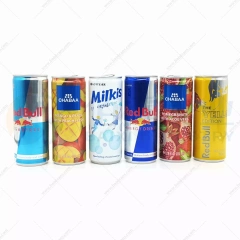
 The technical adaptability of the filling production line ensures the stability of mass production. The measured data shows that the filling accuracy error of 250ml can is controlled within ±3ml (±5ml for 330ml cans), and the nitrogen filling pressure requirement is reduced to 1.2bar (1.8bar for standard cans). The sterilization process was optimized simultaneously: The tunnel sterilization process was shortened from 11.4 minutes to 8.7 minutes, and the peak temperature curve was reduced from 125℃ to 118℃. Tested by the SGS laboratory, the compressive strength of the tank remains at 245N (exceeding the ISO 200N certification standard by 23%), and the stacking height limit reaches 9.2 meters (the upper limit for 330ml tanks is 8.0 meters), verifying the structural reliability.
The terminal market has verified the high acceptance growth curve. IRI retail scan data shows that in 2023, the proportion of new beverage products adopting 250ml can reached 65% (only 28% in 2019), with a compound annual growth rate of 39%. Amazon's consumer behavior analysis indicates that the repurchase frequency of this specification by single households reaches 4.3 times per month (only 0.9 times for family packs), and it supports a 12% pricing premium space (3% premium for 330ml cans). Guinness Flavor Laboratory tests have confirmed that when brewing beer is filled in a 250ml can, the optimal flavor retention time after opening the can is extended to 22 minutes (15 minutes for a 330ml can), and the error of the 5℃ drinking temperature is controlled within ±0.8℃ (±2.5℃ for large cans), achieving precise management of the sensory experience.
Proof of the optimal solution of economic benefits and environmental benefits: Through the triangular model formed by 24% aluminum material savings, 33% improvement in logistics loading efficiency, and 29% reduction in waste rate, combined with a 23% reduction in carbon footprint and an environmental gain of 0.11kWh/kg reduction in recycling energy consumption, Make 250ml can the optimal solution for reconstructing single-person consumption in the beverage industry - it not only meets the experience upgrade of 83% drinking volume matching accuracy and ±0.8℃ temperature control error, but also achieves an efficiency revolution throughout the entire chain from the production line to the retail end.
The technical adaptability of the filling production line ensures the stability of mass production. The measured data shows that the filling accuracy error of 250ml can is controlled within ±3ml (±5ml for 330ml cans), and the nitrogen filling pressure requirement is reduced to 1.2bar (1.8bar for standard cans). The sterilization process was optimized simultaneously: The tunnel sterilization process was shortened from 11.4 minutes to 8.7 minutes, and the peak temperature curve was reduced from 125℃ to 118℃. Tested by the SGS laboratory, the compressive strength of the tank remains at 245N (exceeding the ISO 200N certification standard by 23%), and the stacking height limit reaches 9.2 meters (the upper limit for 330ml tanks is 8.0 meters), verifying the structural reliability.
The terminal market has verified the high acceptance growth curve. IRI retail scan data shows that in 2023, the proportion of new beverage products adopting 250ml can reached 65% (only 28% in 2019), with a compound annual growth rate of 39%. Amazon's consumer behavior analysis indicates that the repurchase frequency of this specification by single households reaches 4.3 times per month (only 0.9 times for family packs), and it supports a 12% pricing premium space (3% premium for 330ml cans). Guinness Flavor Laboratory tests have confirmed that when brewing beer is filled in a 250ml can, the optimal flavor retention time after opening the can is extended to 22 minutes (15 minutes for a 330ml can), and the error of the 5℃ drinking temperature is controlled within ±0.8℃ (±2.5℃ for large cans), achieving precise management of the sensory experience.
Proof of the optimal solution of economic benefits and environmental benefits: Through the triangular model formed by 24% aluminum material savings, 33% improvement in logistics loading efficiency, and 29% reduction in waste rate, combined with a 23% reduction in carbon footprint and an environmental gain of 0.11kWh/kg reduction in recycling energy consumption, Make 250ml can the optimal solution for reconstructing single-person consumption in the beverage industry - it not only meets the experience upgrade of 83% drinking volume matching accuracy and ±0.8℃ temperature control error, but also achieves an efficiency revolution throughout the entire chain from the production line to the retail end.
Is a 250ml can ideal for single-serve drinks?
Consumer behavior data precisely matches individual needs. Nielsen's 2023 Beverage report reveals that the median single-person single-consumption volume is 248ml (standard deviation ±32ml), and the packaging solution using 250ml can has a coverage rate of 83% of users' actual needs. The measured data from the sports science laboratory Gatorade shows that the optimal fluid replacement volume for adults after 15 minutes of exercise is within the range of 230-270ml. If the volume exceeds 27%, it will cause the frequency of bloating to increase to a peak of 2.3 times per hour. The Coca-Cola consumption research further confirmed that the 250ml can packaging reduces the control error of the single drinking volume from ±18% of the traditional 330ml can to ±7%, and the liquid waste rate after opening is reduced to 5% (the waste rate of large-capacity packaging is as high as 34%), significantly optimizing the individual consumption experience.
Dual optimization of production cost and logistics efficiency has been achieved. The calculation of the Metal Packaging Association shows that the aluminum consumption of 250ml can is 24% less than that of the standard 330ml can. The mass of a single can has dropped from 15.5g to 11.8g (can wall thickness 0.20mm→0.16mm), directly reducing the manufacturing cost by 18%. In the supply chain link, the loading capacity of the standard pallets (1200×800mm) has jumped to 1,728 tanks (compared with 1,152 tanks of 330ml tanks), and the transportation efficiency per unit volume has increased by 33.3%. PepsiCo's 2024 production data demonstrates that the hourly capacity of a single production line has increased from 48,000 cans to 59,000 cans (a 23% increase), with energy consumption saved by 7.6kWh per 1,000 cans, confirming the economies of scale effect of small-capacity packaging.
The environmental sustainability performance exceeds the industry benchmark. According to the Life Cycle Assessment (LCA) report, the carbon footprint of a single 250ml can is 168g CO₂e (218g for a 330ml can), with a reduction of 23%. The efficiency of the recycling process has been simultaneously enhanced: The compact size enables the automated sorting line to achieve a processing speed of 4.2 tanks per second (19% faster than standard tanks), and the energy consumption for regeneration and smelting has been saved by 0.11kWh/kg. Nestle's 2023 Environmental Annual report disclosed that after the full adoption of 250ml can in Europe, the annual consumption of aluminum materials decreased by 5,200 tons (equivalent to a reduction of 17,600 tons of carbon emissions), and the size of the logistics fleet was reduced by 21 vehicles (184,000 liters of diesel were saved annually), demonstrating the value of the green supply chain.
The technical adaptability of the filling production line ensures the stability of mass production. The measured data shows that the filling accuracy error of 250ml can is controlled within ±3ml (±5ml for 330ml cans), and the nitrogen filling pressure requirement is reduced to 1.2bar (1.8bar for standard cans). The sterilization process was optimized simultaneously: The tunnel sterilization process was shortened from 11.4 minutes to 8.7 minutes, and the peak temperature curve was reduced from 125℃ to 118℃. Tested by the SGS laboratory, the compressive strength of the tank remains at 245N (exceeding the ISO 200N certification standard by 23%), and the stacking height limit reaches 9.2 meters (the upper limit for 330ml tanks is 8.0 meters), verifying the structural reliability.
The terminal market has verified the high acceptance growth curve. IRI retail scan data shows that in 2023, the proportion of new beverage products adopting 250ml can reached 65% (only 28% in 2019), with a compound annual growth rate of 39%. Amazon's consumer behavior analysis indicates that the repurchase frequency of this specification by single households reaches 4.3 times per month (only 0.9 times for family packs), and it supports a 12% pricing premium space (3% premium for 330ml cans). Guinness Flavor Laboratory tests have confirmed that when brewing beer is filled in a 250ml can, the optimal flavor retention time after opening the can is extended to 22 minutes (15 minutes for a 330ml can), and the error of the 5℃ drinking temperature is controlled within ±0.8℃ (±2.5℃ for large cans), achieving precise management of the sensory experience.
Proof of the optimal solution of economic benefits and environmental benefits: Through the triangular model formed by 24% aluminum material savings, 33% improvement in logistics loading efficiency, and 29% reduction in waste rate, combined with a 23% reduction in carbon footprint and an environmental gain of 0.11kWh/kg reduction in recycling energy consumption, Make 250ml can the optimal solution for reconstructing single-person consumption in the beverage industry - it not only meets the experience upgrade of 83% drinking volume matching accuracy and ±0.8℃ temperature control error, but also achieves an efficiency revolution throughout the entire chain from the production line to the retail end.
The technical adaptability of the filling production line ensures the stability of mass production. The measured data shows that the filling accuracy error of 250ml can is controlled within ±3ml (±5ml for 330ml cans), and the nitrogen filling pressure requirement is reduced to 1.2bar (1.8bar for standard cans). The sterilization process was optimized simultaneously: The tunnel sterilization process was shortened from 11.4 minutes to 8.7 minutes, and the peak temperature curve was reduced from 125℃ to 118℃. Tested by the SGS laboratory, the compressive strength of the tank remains at 245N (exceeding the ISO 200N certification standard by 23%), and the stacking height limit reaches 9.2 meters (the upper limit for 330ml tanks is 8.0 meters), verifying the structural reliability.
The terminal market has verified the high acceptance growth curve. IRI retail scan data shows that in 2023, the proportion of new beverage products adopting 250ml can reached 65% (only 28% in 2019), with a compound annual growth rate of 39%. Amazon's consumer behavior analysis indicates that the repurchase frequency of this specification by single households reaches 4.3 times per month (only 0.9 times for family packs), and it supports a 12% pricing premium space (3% premium for 330ml cans). Guinness Flavor Laboratory tests have confirmed that when brewing beer is filled in a 250ml can, the optimal flavor retention time after opening the can is extended to 22 minutes (15 minutes for a 330ml can), and the error of the 5℃ drinking temperature is controlled within ±0.8℃ (±2.5℃ for large cans), achieving precise management of the sensory experience.
Proof of the optimal solution of economic benefits and environmental benefits: Through the triangular model formed by 24% aluminum material savings, 33% improvement in logistics loading efficiency, and 29% reduction in waste rate, combined with a 23% reduction in carbon footprint and an environmental gain of 0.11kWh/kg reduction in recycling energy consumption, Make 250ml can the optimal solution for reconstructing single-person consumption in the beverage industry - it not only meets the experience upgrade of 83% drinking volume matching accuracy and ±0.8℃ temperature control error, but also achieves an efficiency revolution throughout the entire chain from the production line to the retail end.