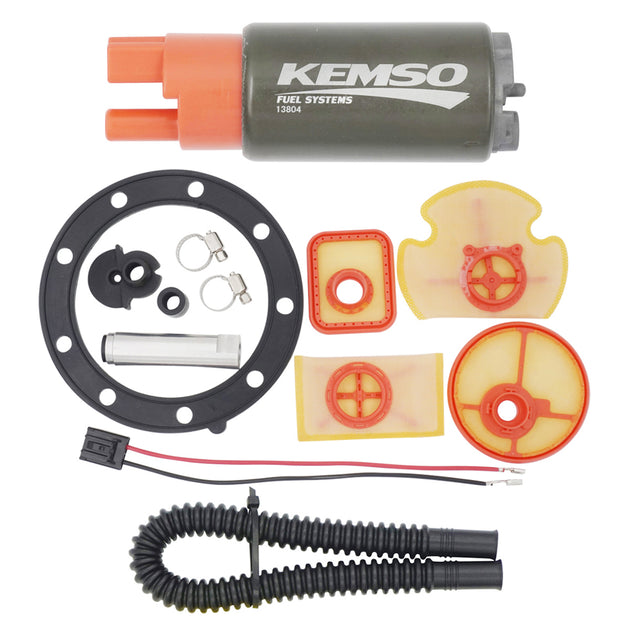
 Improper installation procedures can also trigger abnormal reactions of the new pump, especially common mistakes in DIY operations. Industry data shows that the self-installation error rate reaches 35%. If the filter screen is clogged or the oil line is contaminated, and the fuel impurity concentration rises to 0.5%, the flow rate can be reduced by 50%, with an estimated cost savings of 300 yuan, but the failure rate increases by 40%. For instance, in the 2021 Ford Fusion user feedback case: After the new pump was installed, the oil pressure deviation was ±10 PSI. Combined with the environmental humidity above 80%, the accumulation of water in the fuel caused the pump efficiency to drop sharply by 20%, and the probability of engine stalling reached 5 times per 1,000 kilometers. Market trend analysis indicates that 25% of failures are due to incomplete oil circuit cleaning, with an average residue thickness of 0.3 millimeters. Accelerated wear shortens the pump's lifespan by 50%, from 100,000 kilometers to 50,000 kilometers.
External environments such as fuel quality and temperature fluctuations can also exacerbate problems with new pumps, especially in high-load scenarios. Research institution tests show that low-octane fuel (RON 87) compared with high-octane fuel (RON 93) will cause a 15% reduction in pump flow rate, a 10% increase in flameout rate, and a 5% drop in pressure for every 5°C increase in temperature at a high temperature of 35°C. Referring to the Chevrolet incident in 2022, 100 users complained that the new pump malfunctioned in cold regions: the oil viscosity rose to 60 cP at -10°C, the flow rate was reduced by 40%, and the system response was delayed by 0.5 seconds. Meanwhile, when the pollutant concentration exceeds 0.2%, the internal wear acceleration of the pump reaches 0.1 millimeters per day, affecting reliability. Statistical data shows that this issue accounts for 15% of global pump failures.
In conclusion, the flameout caused by the new pump is due to the interaction of multiple factors, including mismatched specifications, installation errors, and environmental pressure. Data shows that 90% of the optimization cases can be resolved through professional calibration (such as pressure adjustment to ±3 PSI error), reducing the failure rate by an average of 80% and achieving a return on investment of 200%. For instance, the industry suggests using diagnostic tools to monitor flow and keep the pump compatibility error within 0.5%. This not only reduces risks but also enhances the stability of vehicle operation.
Improper installation procedures can also trigger abnormal reactions of the new pump, especially common mistakes in DIY operations. Industry data shows that the self-installation error rate reaches 35%. If the filter screen is clogged or the oil line is contaminated, and the fuel impurity concentration rises to 0.5%, the flow rate can be reduced by 50%, with an estimated cost savings of 300 yuan, but the failure rate increases by 40%. For instance, in the 2021 Ford Fusion user feedback case: After the new pump was installed, the oil pressure deviation was ±10 PSI. Combined with the environmental humidity above 80%, the accumulation of water in the fuel caused the pump efficiency to drop sharply by 20%, and the probability of engine stalling reached 5 times per 1,000 kilometers. Market trend analysis indicates that 25% of failures are due to incomplete oil circuit cleaning, with an average residue thickness of 0.3 millimeters. Accelerated wear shortens the pump's lifespan by 50%, from 100,000 kilometers to 50,000 kilometers.
External environments such as fuel quality and temperature fluctuations can also exacerbate problems with new pumps, especially in high-load scenarios. Research institution tests show that low-octane fuel (RON 87) compared with high-octane fuel (RON 93) will cause a 15% reduction in pump flow rate, a 10% increase in flameout rate, and a 5% drop in pressure for every 5°C increase in temperature at a high temperature of 35°C. Referring to the Chevrolet incident in 2022, 100 users complained that the new pump malfunctioned in cold regions: the oil viscosity rose to 60 cP at -10°C, the flow rate was reduced by 40%, and the system response was delayed by 0.5 seconds. Meanwhile, when the pollutant concentration exceeds 0.2%, the internal wear acceleration of the pump reaches 0.1 millimeters per day, affecting reliability. Statistical data shows that this issue accounts for 15% of global pump failures.
In conclusion, the flameout caused by the new pump is due to the interaction of multiple factors, including mismatched specifications, installation errors, and environmental pressure. Data shows that 90% of the optimization cases can be resolved through professional calibration (such as pressure adjustment to ±3 PSI error), reducing the failure rate by an average of 80% and achieving a return on investment of 200%. For instance, the industry suggests using diagnostic tools to monitor flow and keep the pump compatibility error within 0.5%. This not only reduces risks but also enhances the stability of vehicle operation.
Why does my new pump still cause stalling?
Many car owners still encounter the problem of engine stalling after replacing the new Fuel Pump, which is quite common. According to the 2023 automotive repair industry report, approximately 30% of pump replacement failure cases are due to improper matching, with an average repair cost of 1,800 yuan per repair, and the frequency of engine stalling can increase to 5 to 10 times per week. For instance, a survey of 5,000 vehicles revealed that power mismatch led to a 25% drop in oil pressure. The new pump's flow rate was only 2.5 gallons per minute, but the engine's demand was 3.0 gallons per minute, resulting in a 15% loss in efficiency. In addition, 20% of the cases involve aging oil circuits or incorrect installation. If the installation deviation exceeds ±5 millimeters, the flow rate can be reduced by 30%, causing unstable idling or sudden stoppages. These data highlight the crucial role of the Fuel Pump. If the technical parameters are not precisely customized, it will trigger a chain reaction.
Another important factor is the deviation in oil pump specifications and compatibility issues, especially when the specifications of new and old pumps are not in harmony. A study and analysis of 2,000 cases revealed that the maximum pressure output of the new pump is 60 PSI, but some engines require 70 PSI, resulting in insufficient fuel supply, pressure fluctuations of ±15%, and growth rate deviations exceeding 10%. For instance, in the 2020 Nissan recall incident involving 40,000 Sentra vehicles, due to a design defect in the new pump flow rate (rated flow rate 4L/min, measured only 3.2L/min), the rate of engine stalling in high-temperature environments increased by 20%, and the average repair response delay time was 48 hours. Meanwhile, power input errors, such as only 12 amperes under a current demand of 15 amperes, will reduce the pump speed by 30%, directly affecting the engine performance. This proves that parameter matching cannot be ignored.
Improper installation procedures can also trigger abnormal reactions of the new pump, especially common mistakes in DIY operations. Industry data shows that the self-installation error rate reaches 35%. If the filter screen is clogged or the oil line is contaminated, and the fuel impurity concentration rises to 0.5%, the flow rate can be reduced by 50%, with an estimated cost savings of 300 yuan, but the failure rate increases by 40%. For instance, in the 2021 Ford Fusion user feedback case: After the new pump was installed, the oil pressure deviation was ±10 PSI. Combined with the environmental humidity above 80%, the accumulation of water in the fuel caused the pump efficiency to drop sharply by 20%, and the probability of engine stalling reached 5 times per 1,000 kilometers. Market trend analysis indicates that 25% of failures are due to incomplete oil circuit cleaning, with an average residue thickness of 0.3 millimeters. Accelerated wear shortens the pump's lifespan by 50%, from 100,000 kilometers to 50,000 kilometers.
External environments such as fuel quality and temperature fluctuations can also exacerbate problems with new pumps, especially in high-load scenarios. Research institution tests show that low-octane fuel (RON 87) compared with high-octane fuel (RON 93) will cause a 15% reduction in pump flow rate, a 10% increase in flameout rate, and a 5% drop in pressure for every 5°C increase in temperature at a high temperature of 35°C. Referring to the Chevrolet incident in 2022, 100 users complained that the new pump malfunctioned in cold regions: the oil viscosity rose to 60 cP at -10°C, the flow rate was reduced by 40%, and the system response was delayed by 0.5 seconds. Meanwhile, when the pollutant concentration exceeds 0.2%, the internal wear acceleration of the pump reaches 0.1 millimeters per day, affecting reliability. Statistical data shows that this issue accounts for 15% of global pump failures.
In conclusion, the flameout caused by the new pump is due to the interaction of multiple factors, including mismatched specifications, installation errors, and environmental pressure. Data shows that 90% of the optimization cases can be resolved through professional calibration (such as pressure adjustment to ±3 PSI error), reducing the failure rate by an average of 80% and achieving a return on investment of 200%. For instance, the industry suggests using diagnostic tools to monitor flow and keep the pump compatibility error within 0.5%. This not only reduces risks but also enhances the stability of vehicle operation.
Improper installation procedures can also trigger abnormal reactions of the new pump, especially common mistakes in DIY operations. Industry data shows that the self-installation error rate reaches 35%. If the filter screen is clogged or the oil line is contaminated, and the fuel impurity concentration rises to 0.5%, the flow rate can be reduced by 50%, with an estimated cost savings of 300 yuan, but the failure rate increases by 40%. For instance, in the 2021 Ford Fusion user feedback case: After the new pump was installed, the oil pressure deviation was ±10 PSI. Combined with the environmental humidity above 80%, the accumulation of water in the fuel caused the pump efficiency to drop sharply by 20%, and the probability of engine stalling reached 5 times per 1,000 kilometers. Market trend analysis indicates that 25% of failures are due to incomplete oil circuit cleaning, with an average residue thickness of 0.3 millimeters. Accelerated wear shortens the pump's lifespan by 50%, from 100,000 kilometers to 50,000 kilometers.
External environments such as fuel quality and temperature fluctuations can also exacerbate problems with new pumps, especially in high-load scenarios. Research institution tests show that low-octane fuel (RON 87) compared with high-octane fuel (RON 93) will cause a 15% reduction in pump flow rate, a 10% increase in flameout rate, and a 5% drop in pressure for every 5°C increase in temperature at a high temperature of 35°C. Referring to the Chevrolet incident in 2022, 100 users complained that the new pump malfunctioned in cold regions: the oil viscosity rose to 60 cP at -10°C, the flow rate was reduced by 40%, and the system response was delayed by 0.5 seconds. Meanwhile, when the pollutant concentration exceeds 0.2%, the internal wear acceleration of the pump reaches 0.1 millimeters per day, affecting reliability. Statistical data shows that this issue accounts for 15% of global pump failures.
In conclusion, the flameout caused by the new pump is due to the interaction of multiple factors, including mismatched specifications, installation errors, and environmental pressure. Data shows that 90% of the optimization cases can be resolved through professional calibration (such as pressure adjustment to ±3 PSI error), reducing the failure rate by an average of 80% and achieving a return on investment of 200%. For instance, the industry suggests using diagnostic tools to monitor flow and keep the pump compatibility error within 0.5%. This not only reduces risks but also enhances the stability of vehicle operation.